
Post
A Professional Guide to 3D Facial Contour Sculpting: Achieving Structural Harmony with LUNN
Hello, I am Dr. Hyung-kwon Park, a board-certified dermatologist and the director of Lunn Dermatology Clinic (LUNN).
In the evolving landscape of medical aesthetics, 3D facial contour sculpting has emerged as a cornerstone for those seeking natural rejuvenation. My philosophy—Refining the Details, Achieving Perfect Harmony—moves beyond simple wrinkle reduction to address the underlying structural planes of the face. By strategically managing volume and skin integrity, we can achieve a balanced look that honors your unique anatomy. In this guide, I will share professional insights into how these advanced techniques create lasting harmony.
Understanding 3D Facial Contour Sculpting: A Holistic Design Approach
3D facial contour sculpting is a comprehensive aesthetic methodology that integrates multiple non-surgical interventions to refine the structural dimensions of the face. Unlike traditional methods that focus on isolated lines, this holistic approach considers the interplay of light and shadow, ensuring that transitions between facial segments are smooth. By analyzing the face as a dynamic three-dimensional object, I identify areas of structural depletion and provide the necessary support to restore a healthy appearance while maintaining the natural expressions that define your personality.
Defining 3D Facial Design and Harmony
3D facial design is a specialized framework used at Lunn Dermatology Clinic to evaluate the face as a unified structure. I focus on achieving a 1mm level of precision, where even minor adjustments can significantly influence the overall perception of facial harmony. This design philosophy emphasizes the balance between the forehead, mid-face, and jawline. Unlike factory-style clinics, I personally map out the facial structure by feeling the muscle thickness, wrinkle depth, and fat distribution by hand. This allows me to address age-related changes such as volume loss and tissue laxity with extreme detail. The goal is to recreate the natural curves and angles characteristic of a youthful visage without an "overfilled" look.
The Science of Strategic Volumization
Strategic volumization involves the precise placement of fillers to replace lost structural support. At LUNN, I prioritize "low-hydrophilic" fillers, such as Belotero, which attract less water and minimize post-procedure swelling or the Tyndall effect. Longevity and results vary significantly depending on an individual’s metabolism and the specific area treated. By targeting the deep fat pads and structural planes, we provide a lift that originates from the foundation. While the procedure is efficient, it is grounded in complex medical principles. Patients should be aware that temporary swelling, redness, or bruising may occur for a few days as the material integrates with the tissue.
Transitioning from 2D Adjustments to 3D Structural Support
Modern aesthetics has transitioned from 2D adjustments—targeting surface-level wrinkles—to 3D structural support addressing the global architecture of the skin. Aging involves bone resorption, fat pad atrophy, and skin thinning. By providing 3D support, we address the root causes of shadows and sagging. For example, treating the nasolabial folds directly is a 2D approach; supporting the cheek structure to lift the mid-face is a 3D solution. This ensures the face looks rejuvenated from every angle. At Lunn Dermatology Clinic, I prioritize this structural perspective to ensure patients achieve a look that is anatomically correct. Please note that individual results vary, and multiple sessions may be required depending on skin condition.
Core Modalities for Non-Surgical Facial Refinement
Core modalities for non-surgical facial refinement refer to the specific technologies and injectable treatments used to manipulate volume and skin tension. These tools allow for high levels of control, offering alternatives to invasive surgery. By combining different modalities, such as fillers for volume and lifting lasers for tension, I create a multifaceted treatment plan. Each modality is selected based on its unique ability to interact with specific layers, from the deep SMAS layer to the superficial dermis.
Facial Volume Restoration with Premium Dermal Fillers
Facial volume restoration at LUNN utilizes premium fillers to provide immediate structural enhancement. I often describe this as "erasing shadows." For instance, dark circles are often caused by the tear trough ligament pulling on the skin, creating a shadow. By precisely placing filler, we can smooth this transition. I emphasize a conservative approach, often starting with a modest amount to build a foundation. This ensures that the transition is gradual. While fillers are highly effective, results are not permanent, and maintenance is typically needed. Potential side effects like localized tenderness or bruising are possible, making it vital to seek treatment from a specialist who understands vascular anatomy.
Non-Invasive Skin Tightening: Ultherapy and Thermage
Non-invasive skin tightening focuses on improving structural integrity by stimulating natural regeneration. I use devices like Ultherapy to target the deep fascia (SMAS) and Thermage for uniform dermal elasticity. In my practice, I compare this to home renovation: lifting the structure is like fixing the foundation before replacing the wallpaper. These technologies target multiple skin layers to provide a lift that complements volume restoration. A typical plan may involve yearly sessions to maintain optimal skin tension. The process is designed for comfort, though a warm or tingling sensation is common. It is a critical component of 3D sculpting because it ensures the skin is tight enough to reflect underlying structural changes accurately.
Synergy Programs: Combining ONDA and Skin Boosters
To complete the 3D contour, I often utilize ONDA technology and skin boosters. ONDA is particularly effective for simultaneously reducing unnecessary volume (like in the lower face) and improving elasticity. This works synergistically with skin boosters, which I describe as "watering parched soil." Skin boosters improve the internal environment of the skin, enhancing luminosity. This effect is crucial for a 3D result because well-hydrated skin reflects light more effectively, making contoured features pop. These treatments ensure the surface of the sculpted face looks as healthy as the structure. As with all treatments, sun protection and proper hydration are essential post-care steps to preserve results.
Comparing Structural Solutions for Facial Harmony
Comparing structural solutions involves analyzing treatment options to determine what fits a patient's unique anatomy. Not every face requires the same intervention; some need volume, while others require a mechanical or thermal lift. This comparative approach ensures the chosen treatment aligns with your goals, whether you desire immediate refinement or gradual improvement.
Analysis of Ultherapy (Lifting) vs. Thermage (Tightening)
When addressing facial contouring, I often compare Ultherapy and Thermage. Ultherapy provides a "lifting" effect by targeting the deep SMAS layer with micro-focused ultrasound, making it ideal for defining the jawline. Thermage provides a "tightening" effect by using radiofrequency to treat the entire dermis, improving overall skin density. For many patients at LUNN, a combination of both—addressing different depths—provides the most balanced result. Both procedures are non-invasive and allow for a quick return to daily life. However, results are gradual, often peaking at 2–3 months as new collagen forms. Possible side effects include temporary swelling or mild redness.
Comparison Table of Non-Surgical Sculpting Techniques
| Feature | Dermal Fillers | Ultherapy (Lifting) | Thermage (Tightening) |
|---|---|---|---|
| Primary Goal | Volume & Structure | Deep Tissue Lift | Dermal Elasticity |
| Typical Duration | Varies by Individual | Approx. 6 - 12 months | Approx. 12 months |
| Recovery Time | 1 - 2 days (Bruising) | Minimal | Minimal |
| Key Target | Deep Fat / Bone Plane | SMAS (Fascia) | Dermis Layer |
| Initial Results | Immediate | Gradual (2-3 months) | Gradual (2-3 months) |
The LUNN Philosophy: Specialist-Led Precision in Apgujeong Rodeo
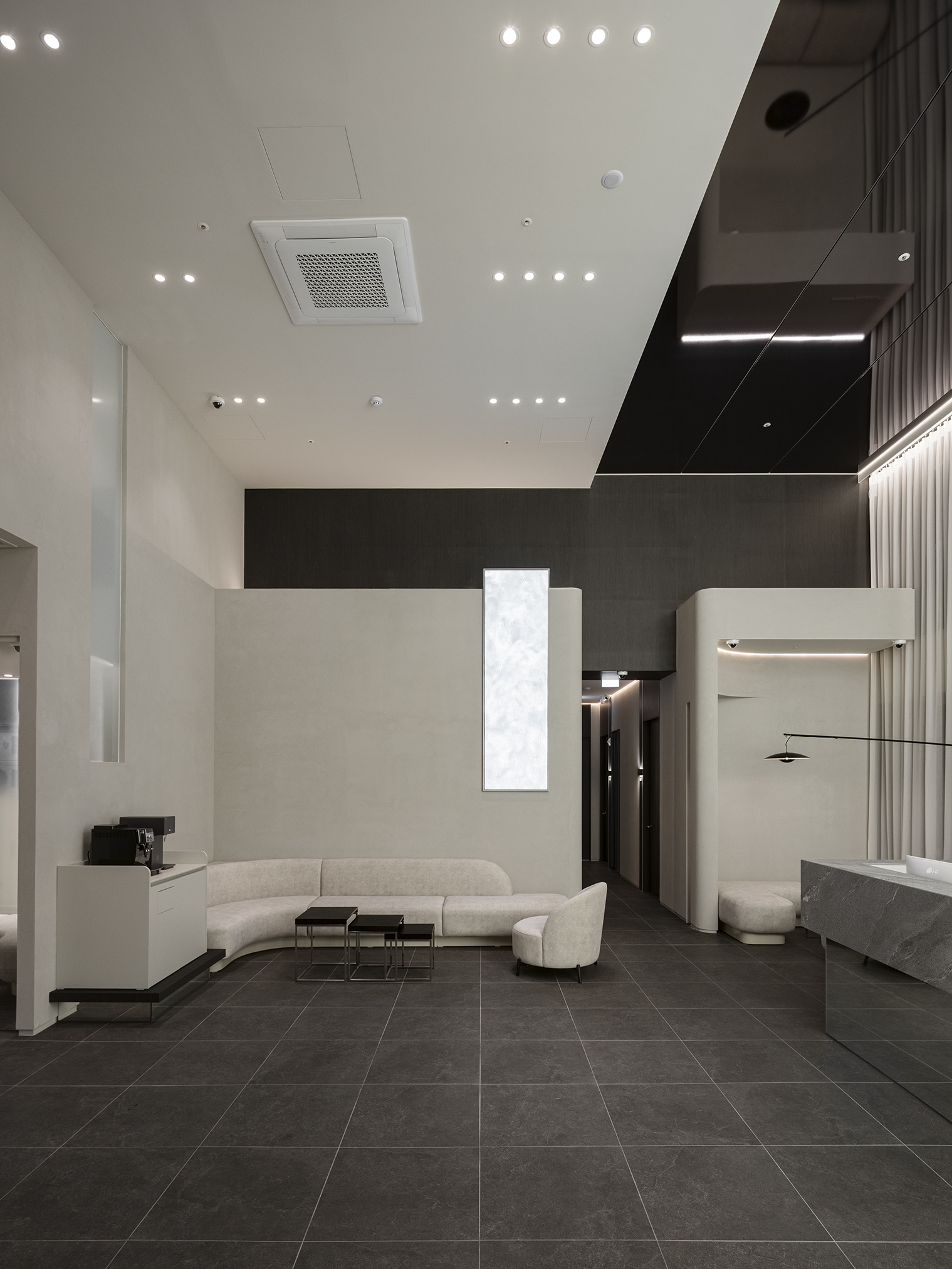
The LUNN philosophy is rooted in the belief that medical aesthetics should be a precise, specialist-led process. Located in Apgujeong Rodeo, my clinic provides an atmosphere of openness and professional care, featuring a 5-meter-high ceiling to ensure patients feel comfortable during their journey. I reject "factory-style" treatments. I personally handle everything from the initial consultation to the procedure and follow-up, ensuring a consistent and responsible medical experience.
Customized Facial Design Plans
At LUNN, every journey begins with a comprehensive facial design plan. I analyze the face across core structural planes to identify where support is needed. This customized approach ensures we are not just treating symptoms, but addressing the causes of facial aging. Our programs often combine various technologies over time to achieve a transformative yet natural result. This long-term perspective allows the tissues to adapt gradually. By focusing on the 1mm difference, we make subtle changes that collectively create a significant improvement in facial balance. This level of customization is what sets Lunn Dermatology Clinic apart.
The Importance of a 1mm Difference in Medical Aesthetics
In facial design, the difference between a natural look and an artificial one often comes down to just 1mm. This precision is the hallmark of the care I provide. It represents the meticulous attention required when placing filler or adjusting energy levels. By respecting these small measurements, I ensure facial proportions remain balanced and your natural identity is preserved. This is particularly important as patients increasingly seek results that look entirely natural. Each treatment is an opportunity to refine and enhance, rather than overhaul. For more insights, you can also follow my journey on Threads @dr.lunn.
Frequently Asked Questions
Q. What exactly is 3D facial contour sculpting?
3D facial contour sculpting is a comprehensive approach using non-surgical techniques, such as fillers and lifting devices, to restore volume and define the structural planes of the face. It treats the face as a unified structure—addressing the forehead, cheeks, and jawline—to ensure a natural transition between features.
Q. How does your facial design differ from standard filler treatments?
My design focuses on anatomical harmony rather than just filling a single wrinkle. I personally assess muscle thickness, bone structure, and fat distribution before any procedure. This minimizes the risk of overfilling and ensures results enhance your natural beauty rather than changing your fundamental look.
Q. What are the primary benefits of Ultherapy and Thermage?
These technologies stimulate natural collagen production without surgical incisions. Ultherapy lifts deeper tissues like the SMAS layer, while Thermage improves the density and elasticity of the dermis. Because results are gradual, the improvement looks entirely natural over several months.
Q. Can non-surgical treatments help with a double chin?
Yes, I often use ONDA technology to target localized fat in the submental area while tightening the overlying skin. This enhances the definition of the jawline. It is most effective for localized fat and works well in combination with lifting lasers for a crisp profile.
Q. Is there significant downtime associated with these procedures?
Most non-surgical sculpting treatments involve minimal downtime. Fillers may cause mild bruising or swelling for a few days, while lifting lasers like Ultherapy and Thermage allow for an immediate return to daily activities. I provide detailed post-care instructions to ensure a smooth recovery.
Q. How long do the results of volume restoration typically last?
The longevity of fillers varies based on the product type and the individual's metabolism. While some may see results for a year, regular maintenance is recommended to account for the natural aging process. I work with each patient to develop a personalized follow-up schedule.
Key Takeaways
- 3D Approach: Focuses on structural planes and holistic harmony rather than isolated wrinkles for a natural look.
- Precision Matters: Achieving a 1mm difference is crucial for maintaining natural proportions and avoiding an artificial appearance.
- Customized Modalities: Combines fillers for volume, Ultherapy/Thermage for tightening, and ONDA for contouring based on individual anatomy.
- Specialist-Led Care: Dr. Hyung-kwon Park personally oversees the entire process from consultation to procedure in Apgujeong Rodeo.
- Minimal Downtime: Most treatments allow for a quick return to daily life, with results evolving naturally over time.
Lunn Dermatology Clinic / Dr. Hyung-kwon Park
FAQ
- What is 3D facial contour sculpting exactly?
- 3D facial contour sculpting is a non-surgical aesthetic approach that focuses on restoring the overall balance of the face. Unlike traditional treatments that target isolated wrinkles, it uses a combination of fillers and threads to address volume loss and sagging across the X, Y, and Z axes. This results in a more natural, rejuvenated appearance that respects the original structural harmony of the face.
- How long do the results of non-surgical sculpting typically last?
- The longevity of results varies based on the individual and the products used during the procedure. Hyaluronic acid fillers generally last between 6 and 18 months, while thread lifts can provide structural support for 12 months or longer. Maintaining a healthy lifestyle and following a customized skincare program can help extend the duration of these aesthetic improvements.
- Are there common side effects associated with these treatments?
- Patients may experience mild and temporary side effects, including redness, swelling, or minor bruising at the injection or insertion sites. These symptoms typically resolve within 3 to 5 days without the need for medical intervention. We use specialized techniques and tools, such as micro-cannulas, to minimize discomfort and the risk of complications during the process.
- Is there significant downtime required after the procedure?
- One of the primary benefits of non-surgical 3D sculpting is the minimal downtime required. Most patients are able to return to their daily activities immediately after leaving the clinic. While some minor swelling may occur, it is significantly less invasive than surgical alternatives and does not require a long recovery period or general anesthesia.
- Can 3D facial sculpting help with a double chin?
- Yes, 3D sculpting effectively addresses the lower face, including the submental area or double chin. By using fat-dissolving injections or specialized lifting threads, we can reduce excess fat and tighten the skin along the jawline. This improves the facial profile and creates a more defined transition between the face and the neck.
- Who is the ideal candidate for a dermatologist-led facial design?
- The ideal candidate is anyone looking to restore lost volume or improve facial symmetry without undergoing major surgery. It is particularly effective for individuals experiencing early signs of aging, such as hollow temples or a sagging jawline. A comprehensive consultation is necessary to ensure the skin has enough elasticity to respond well to non-surgical modalities.
- How do I know if I need fillers or a thread lift?
- The choice between fillers and thread lifting depends on whether your primary concern is volume loss or skin sagging. Fillers are best for replenishing lost volume and smoothing deep folds, while thread lifts are designed to reposition and elevate descending tissue. Many patients at lunnclinic benefit from a combination of both for the most balanced results.